

Categories
Real Estate, Real Estate TipsPublished February 20, 2026
The "F" Word: Selling a House with Foundation Issues in Dayton

By Adam Martin Team Lead, Loxley Martin | Top-Rated Dayton & Greene County Realtor
It is the word that makes every homeowner’s stomach drop. You are getting ready to sell, and you notice a stair-step crack in the basement block wall. Or maybe a door frame upstairs looks a little crooked.
"Foundation."
In real estate, it is the ultimate "F" word. Sellers instantly imagine a condemned house, a $50,000 repair bill, or a deal falling apart at the closing table.
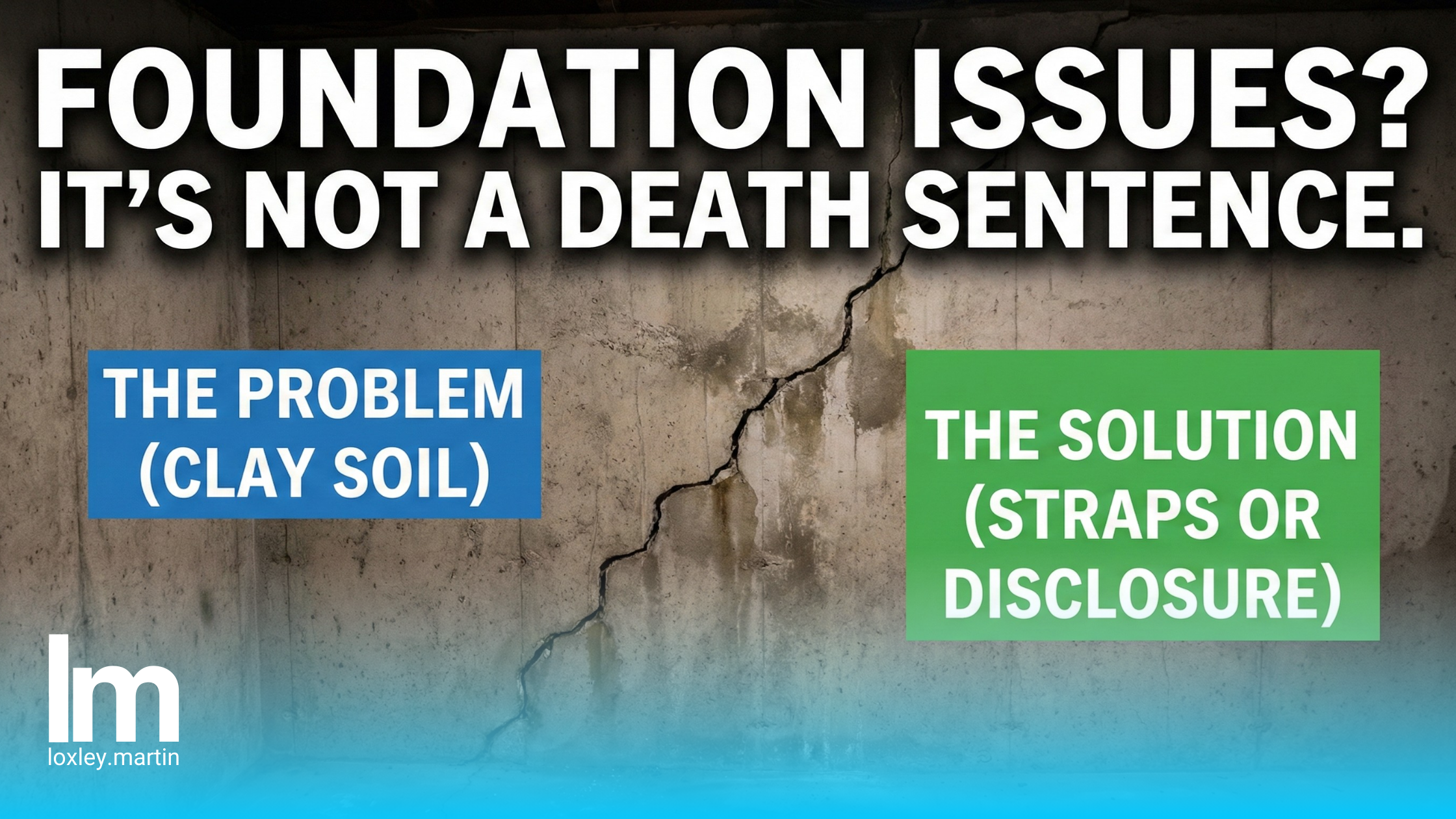
But here is the reality check for the Miami Valley: If you live in Dayton, Greene County, or Beavercreek, you probably have foundation "movement." Our region is built on heavy, expansive clay soil. It expands when wet and shrinks when dry, pushing and pulling on our basements constantly.
So, can you sell a house with foundation issues? Yes. We do it all the time. But you have to choose your path carefully: Fix It or Disclose It. Trying to hide it is the only way you truly lose.
The "Dayton Clay" Factor: Why It Happens Here
First, stop beating yourself up. You likely didn't do anything wrong. Dayton soils are rich in clay and silt. When we get heavy spring rains, that soil swells like a sponge, creating hydrostatic pressure that pushes against your basement walls. When we get a summer drought, the soil pulls away. Over 30 or 40 years, this cycle causes bowing walls, horizontal cracks, and settling.
The "Red Flags" Buyers Look For:
- Horizontal Cracks: These usually indicate pressure from the outside pushing the wall in.
- Stair-Step Cracks: Common in block walls, often indicating settling.
- Bowing: If the wall looks like it has a "belly," that is a structural concern.
Option 1: Fix It (The Top Dollar Strategy)
If you want to sell to a retail buyer (a family) for full market price, the foundation usually needs to be stabilized. Banks like FHA and VA are very strict about structural integrity. They often won't lend on a house with a bowing wall.
The Strategy: We hire a reputable local structural engineer or foundation company to install carbon fiber straps or steel beams.
- The Cost: It is often less than you think. Stabilizing a wall might cost $5,000–$8,000, not $50,000.
- The ROI: You get a Transferable Warranty. When we list the home, we market it as: "Foundation Reinforced with Lifetime Transferable Warranty." Suddenly, the defect becomes a feature. Buyers love warranties.
Option 2: Sell "As Is" (The Discount Strategy)
If you don't have the cash to fix it, you can sell it as-is. But you cannot sell it for full price.
The Math: Buyers will overestimate the cost of the repair.
- Actual Repair Cost: $10,000.
- Buyer's "Fear" Discount: $20,000.
If you sell as-is, you are likely selling to a Cash Investor or a conventional buyer with a heavy down payment, because traditional financing might fall through. You have to price the home aggressively to compensate them for the risk.
The "Fatal Error": Hiding It
I cannot stress this enough: Do not paint over the cracks. In Ohio, failing to disclose a known structural defect is fraud. If you patch a crack and paint the wall without disclosing it, and that crack re-opens six months later (which it will), the buyer can sue you for the repair and damages.
My Rule: If you see a crack, we disclose it. "Basement has typical settlement cracks. No active water observed." Honesty builds trust. Deception builds lawsuits.
The Bottom Line
A foundation issue is not a death sentence for your sale. It is just a math problem. We either spend the money to fix it (and get a higher price) or we drop the price (and save the hassle). But we never, ever ignore it.
Cracked Basement? Let's Get an Opinion.
Not sure if that crack is "normal settling" or a "structural failure"? I can connect you with trusted local structural engineers who will give us the truth—not a sales pitch.
Adam Martin Team Lead, Loxley Martin Your Dayton & Greene County Real Estate Expert

Adam Martin
| LoxleyMartin | Howard Hanna
or another way